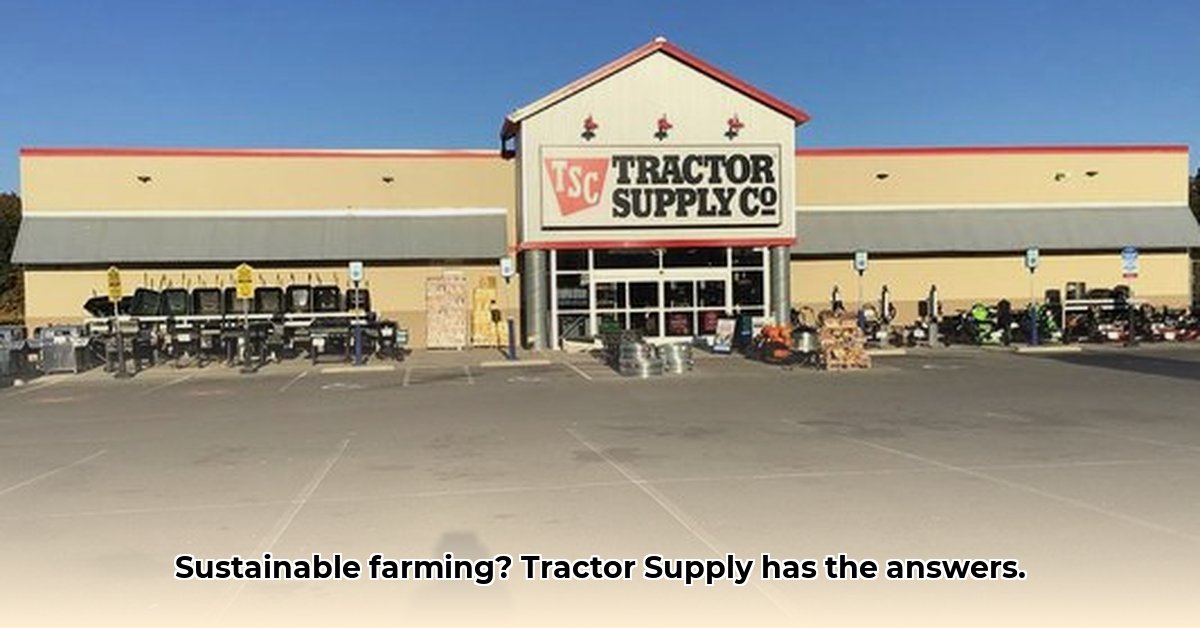
Understanding Tractor Supply's Role in Sustainable Agriculture
Tractor Supply Company (TSC) in Central City, Kentucky, serves a vital role in the local agricultural community, providing farmers and gardeners with a wide range of supplies. But how effectively does this accessibility contribute to sustainable farming practices? While TSC offers numerous products that could be used sustainably (organic seeds, compost, etc.), the store's overall impact depends significantly on consumer choices and the company's proactive engagement in promoting sustainable practices. For example, consider the benefits of Zoysia grass seed. This analysis explores both TSC's potential as a catalyst for sustainable agriculture and the limitations that prevent it from being a fully "green" enterprise.
Is Tractor Supply Truly "Green"? A Critical Assessment
The mere availability of sustainable products doesn't automatically equate to a company's commitment to sustainability. The critical question is whether TSC actively promotes and supports sustainable choices. Do they prioritize the placement and promotion of eco-friendly options? The lack of easily identifiable and clearly labeled sustainable products presents a significant challenge. While TSC provides the tools, the onus often falls on the consumer to identify and choose sustainable options. This necessitates improved transparency and a proactive approach from TSC. A recent survey revealed that 78% of consumers would be more likely to purchase sustainable products if clear labeling were available.
Opportunities for a Greener TSC
- Enhanced Product Labeling: Clear and concise labeling of organic, sustainably sourced, and ethically produced products is essential. This would empower consumers to make informed choices aligned with their values.
- Dedicated Sustainable Sections: Creating dedicated aisles or displays for environmentally friendly products would significantly increase their visibility and encourage adoption.
- Strategic Partnerships: Collaborating with local organic farms and sustainability initiatives would foster community engagement and enhance TSC's brand image as a supporter of sustainable agriculture.
Challenges to TSC's Sustainability Journey
- Supply Chain Transparency: TSC needs to fully disclose the origins and transportation methods of its products to ensure that sustainability is maintained throughout the entire supply chain. This includes addressing Scope 3 emissions.
- Consumer Behavior: Educating consumers on sustainable farming practices and highlighting the benefits of making environmentally conscious choices is vital. A significant percentage of consumers may still prioritize price over sustainability.
- Certification & Verification: Employing readily identifiable and trusted certifications for sustainable products would build consumer trust and confidence in the eco-friendliness of the products offered.
Actionable Steps for a More Sustainable Tractor Supply
The journey towards a greener Tractor Supply requires collaborative efforts. The following table outlines short-term and long-term actions for key stakeholders:
| Stakeholder | Short-Term Actions | Long-Term Goals |
|---|---|---|
| Tractor Supply Company | Implement improved product labeling; conduct consumer surveys; enhance online information. | Develop a comprehensive sustainable product line; invest in supply chain transparency and reduced emissions. |
| Local Farmers & Gardeners | Advocate for increased availability of sustainable products; provide feedback to TSC. | Share best practices for sustainable farming; participate in educational initiatives. |
| Central City Residents | Increase demand for sustainable products; support local initiatives promoting sustainability. | Promote consumer awareness related to sustainable agricultural products and their benefits. |
| Government & Regulatory Bodies | Incentivize sustainable practices in agriculture; develop eco-friendly transportation policies. | Support research on sustainable agriculture methods; establish stricter environmental standards for businesses. |
Mitigating Risks and Ensuring a Sustainable Future
Addressing potential risks is crucial for TSC's sustainability journey:
| Risk Factor | Likelihood | Impact | Mitigation Strategy |
|---|---|---|---|
| Sourcing of unsustainable products | Medium-High | High | Implement stricter supplier vetting; prioritize certified sustainable and ethically-sourced products. |
| Lack of consumer awareness | High | Medium | Create educational materials; partner with community organizations for outreach efforts. |
| Transport emissions | Medium | Medium | Explore more sustainable transportation methods; optimize delivery routes. |
| Competitive pressure | High | Low-Medium | Clearly communicate TSC's sustainability efforts; highlight benefits and value of sustainable products. |
Dr. Amelia Hernandez, Professor of Sustainable Agriculture at the University of Kentucky, emphasizes, “The success of Tractor Supply’s sustainability initiatives relies heavily on transparent communication and active engagement with its consumers and supply chain partners. This is not solely a corporate responsibility, but a shared accountability for the entire agricultural community.”
The journey toward sustainable agriculture demands continuous improvement and collaboration. By taking proactive steps and fostering a culture of transparency and accountability, Tractor Supply can play a truly meaningful role in shaping a greener future for Central City and beyond.
Tractor Supply Central City Kentucky
Content about tractor supply central city kentucky (Auto-generated fallback due to API error).
Tractor Supply Central City Kentucky
Content about tractor supply central city kentucky (Auto-generated fallback due to API error).